
 EN
Elevating Culinary Arts and Mixology with Edible Brilliance
Culinary professionals across Michelin-starred dining rooms and boutique bakeries regularly turn to gold leaf flakes to transform desserts and celebratory drinks into memorable visual centerpieces. Unlike flat gold sheets that require rigid precision across broad cakes, scattered flakes provide an organic texture that catches ambient dining light across multi-tiered wedding cakes, dark chocolate truffles, and delicate pastries. In beverage craft, mixologists suspend micro-flaked gold within viscous liqueurs, prestige champagnes, and signature cocktails. Because pure gold possesses a microscopic thickness and minimal mass, these metallic particles float smoothly through liquid mediums rather than sinking directly to the base of the glass. Beyond pure aesthetics, incorporating gold leaf flakes into fine dining creates a sense of luxury and festivity, helping hospitality venues offer distinctive tasting experiences. Food safety compliance remains the absolute foundation in culinary applications. Edible gold requires certified purity under European Union food additive regulation E175 and equivalent global food safety benchmarks. Pure edible gold undergoes specialized mechanical processing without toxic base metals, ensuring the product remains chemically inert, neutral in flavor, and safe during digestion.
Formulating Luxury Cosmetics and High-End Dermal Treatments
The classic appeal of gold has expanded from decorative arts into high-performance skincare and personal care formulation. Beauty formulators integrating gold leaf flakes into facial serums, treatment oils, and hydrating face masks focus on optical illumination and skin conditioning. When smoothed over clean skin, micro-sized gold flakes interact with natural skin lipids, spreading delicate particles across facial contours to create an immediate radiant effect that softens the visual look of fine lines and uneven texture. In cosmetic science, gold is valued for its biocompatibility, soothing properties, and long history in skin rejuvenation treatments. Formulating chemists paying close attention to cosmetic emulsions must balance formulation viscosity carefully. When base liquids are too thin, heavy metallic flakes settle at the bottom, reducing product appeal on store shelves. Suspending premium gold leaf flakes evenly within crystal-clear serums or rich gel bases produces immediate shelf distinction for luxury brands. Adhering to ISO 22716 cosmetic manufacturing guidelines ensures that cosmetic flakes remain sterile, thoroughly tested for heavy metals, and free from microbial impurities to suit delicate skin profiles.
Transforming Resin Art and Architectural Decorative Accents
Contemporary artists, epoxy crafters, and architectural gilders use gold leaf flakes to add rich dimensional shine to physical objects. During epoxy resin casting for river tables, geode wall canvases, coasters, and custom jewelry, scattered metallic fragments remain suspended inside clear polymer layers, reflecting light from several internal angles. This multidimensional depth proves difficult to replicate with flat metallic pigments or mica powders, which often create a hazy surface rather than clear reflective brilliance. Decorative gold leaf flakes create dramatic contrast when paired with rich charcoal, dark emerald, or clean marble white pigments. On architectural moldings, antique picture frames, and heritage restorations, gilders apply adhesive before scattering flakes over complex curves and deep carvings. This fragmented gilding technique achieves a natural antique patina while covering minor wood grain imperfections and cutting down labor hours compared to traditional flat leaf gilding. In modern beauty salons, nail technicians also apply miniature gold leaf flakes under clear gel topcoats to create long-lasting metallic accents.
Navigating Material Purity Between Genuine 24K and Imitation Alloys
Choosing the right variety of gold leaf flakes depends on metallurgical composition, functional requirements, and target project budgets. Flakes fall into two distinct groups, consisting of genuine 24K gold and imitation gold alloys. Genuine 24K gold contains at least 99 percent pure elemental gold, providing hypoallergenic properties and total resistance to environmental oxidation, which makes it essential for food, cosmetics, and medical grade uses. Because genuine gold never tarnishes, exterior architectural details and fine artworks finished with genuine gold leaf flakes retain their radiant warmth for decades without protective clear coats. In contrast, imitation flakes consist of copper and zinc alloys formulated to match the rich appearance of pure gold at an economical price point. While imitation gold leaf flakes serve large craft designs, resin furniture, and temporary indoor exhibits exceptionally well, copper content makes them sensitive to atmospheric moisture. Without protective coatings, imitation flakes exposed to humidity, sunlight, or reactive solvents can gradually lose brilliance or develop a greenish patina. Applying clear acrylic or polyurethane sealants over finished surfaces locks out moisture and keeps decorative projects bright over extended periods.
Technical Handling Protocols to Maximize Visual Impact and Yield
Applying lightweight gold leaf flakes demands controlled techniques to minimize waste and ensure crisp visual results. Because loose flakes are exceptionally thin, air currents and static electricity can cause sudden drifting. Experienced gilders and workshop crafters recommend working in closed indoor spaces with moderate humidity to control static build-up on synthetic tools. Rather than touching flakes directly with fingers, which transfers natural skin moisture and tears delicate edges, operators handle material using anti-static bamboo tweezers, soft hair brushes, or specialized vacuum pens. When decorating structural accents or canvas art, practitioners apply gilding adhesive and wait until the liquid dries to a clear tacky stage before laying down material. Placing gold leaf flakes over wet glue causes the metal to sink into the adhesive and lose surface reflectivity, while applying over a tacky base holds each flake flat and secure. Lightly smoothing the surface with a soft cotton pad secures the bond, after which remaining loose particles can be brushed away and collected for future projects to maximize workshop yield.
Scaling Commercial Production Through Jinzi Foil Industry
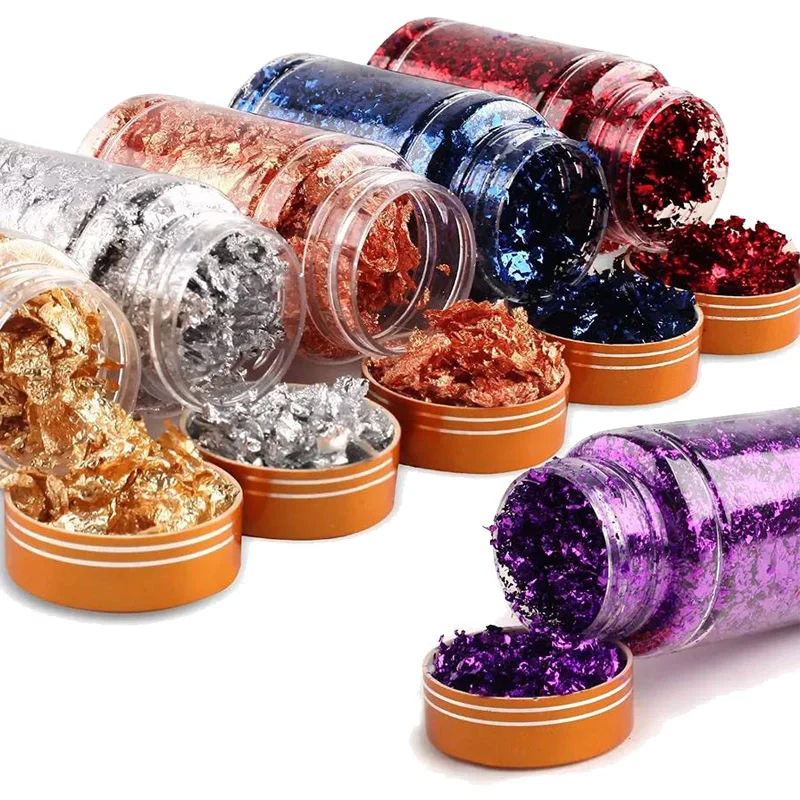
Moving from small handmade batches to commercial volume calls for a dependable manufacturing partner with proven production capacity. Global businesses sourcing gold leaf flakes require steady material thickness, reliable lead times, and comprehensive quality documentation. Jinzi Foil Industry provides end-to-end manufacturing solutions supported by over fifteen years of dedicated industry experience. Operating a modern eight thousand square meter production facility equipped with more than sixty-five automated beating and foil processing machines, Jinzi Foil Industry manufactures over thirty million foil units each year. Whether clients require certified 24K edible gold flakes matching international food safety standards or decorative gold leaf flakes in vibrant colors, Jinzi Foil Industry enforces strict inspection standards across every batch. Comprehensive OEM and ODM services allow brand owners, hospitality chains, and craft wholesalers to select custom packaging options, including shaker bottles, compact jars, and bulk containers. Combining traditional foil beating knowledge with modern automated production, Jinzi Foil Industry delivers uniform flake quality, rich metallic luster, and reliable global fulfillment to support growing brands worldwide.
Table of Contents
- Elevating Culinary Arts and Mixology with Edible Brilliance
- Formulating Luxury Cosmetics and High-End Dermal Treatments
- Transforming Resin Art and Architectural Decorative Accents
- Navigating Material Purity Between Genuine 24K and Imitation Alloys
- Technical Handling Protocols to Maximize Visual Impact and Yield
- Scaling Commercial Production Through Jinzi Foil Industry