
 EN
Seamless Architectural Finishes on Expansive Surfaces
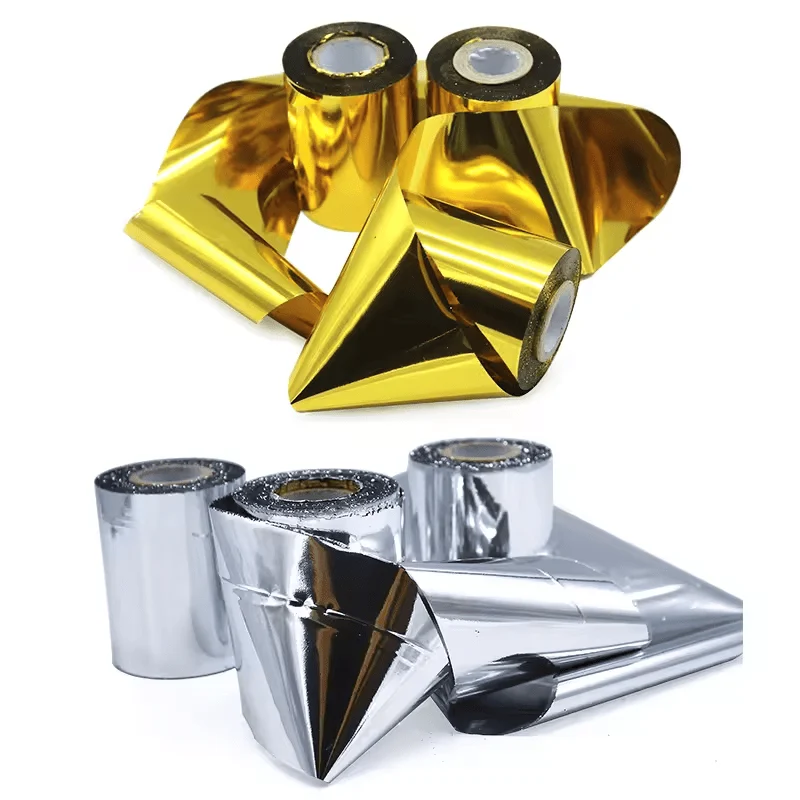
Commercial interior architecture frequently demands metallic opulence across expansive flat ceilings, continuous wall cornices, and grand commercial pillars. For decades, traditional square leaves dominated the gilding trade, yet handling individual four-inch or six-inch leaves across thousands of square meters introduces severe project bottlenecks. Gilded seams multiply exponentially, labor hours escalate dramatically, and inconsistent overlapping creates visible visual banding under high-lumen architectural lighting. Adopting roll imitation gold leaf for large surface gilding fundamentally transforms these large-scale decorative workflows. Rather than transferring hundreds of loose individual squares under draft-sensitive conditions, installers roll out uninterrupted continuous ribbons of shimmering brass alloy directly over pre-tackified substrates. This streamlined mechanical progression cuts down overlap seams by up to eighty percent while ensuring uniform leaf tension from wall edge to center field. Experienced architectural gilders recognize that on flat drywall panels, fiber-cement boards, or expansive fiberglass crown moldings, minimizing physical surface disruptions delivers that coveted liquid-gold appearance without astronomical labor costs. Modern contract gilding demands rapid surface turnover without compromising aesthetic integrity, making continuous ribbon formats an indispensable standard for luxury hospitality venues, casinos, and flagship retail environments where construction schedules remain uncompromisingly rigid.
Structural Anatomy and Mechanical Handling of Continuous Ribbon Leaf
Achieving flawless surface tension requires a thorough understanding of material composition and substrate physics. Unlike genuine twenty-four-karat gold beaten to fractions of a micron, imitation metal leaf consists predominantly of a ductile copper and zinc alloy formulated to replicate the luminous tonal richness of high-karat gold. In continuous ribbon manufacturing, the alloy foil attaches delicately to a continuous roll of silicone-treated or waxed carrier backing paper. This protective ribbon backing serves a vital dual mechanical function: it shields the ultra-thin alloy from direct hand contact and acts as a mechanical guide under linear roller pressure. The foil releases smoothly from the backing tape only upon contacting an active adhesive film, eliminating air pockets, static clinging, and erratic wind tearing. Deploying roll imitation gold leaf requires synchronized hand tension, allowing the rolling wheel applicator or manual palm guide to lay down the ribbon without buckling or premature shearing along high-friction transitions. Selecting the right roll width balances application velocity against adhesive open time, ensuring uninterrupted coverage across expansive decorative paneling without excessive seam buildup or material fatigue.
Precision Application Methodology from Surface Primer to Final Burnish
Mastering continuous gilding relies on precise adhesive selection and climate management on site. Water-based acrylic gilding size has become the global benchmark for indoor architectural installations due to low volatile organic compound emissions and fast, predictable drying profiles. Applicators must prime the substrate to an impeccably smooth finish, ensuring a true Level 5 drywall specification where residual sanding dust, pinholes, or surface ridges cannot telegraph through the micro-thin foil. The adhesive must be applied in a thin, uniform wet film of roughly twenty-five to thirty-five microns and allowed to transition from milky white to complete transparent tackiness. Laying the ribbon too early into wet glue traps moisture, causing hydraulic blistering and severe metal discoloration, while waiting beyond the open window results in weak interfacial bonding and premature flaking. Once the adhesive reaches an aggressive contact tack, unspool the roll imitation gold leaf smoothly across the surface with steady forward momentum, pressing lightly behind the unrolling point with a soft goat-hair mop or velvet roller. Gentle directional buffing dislodges fringe remnants along seams, producing an even, reflective metallic plane that mimics solid architectural brass cladding.
Environmental Durability and Essential Topcoat Protection Protocols
Because imitation metal compositions rely heavily on base metals like copper and zinc, chemical stabilization represents an essential engineering phase for long-term project success. Bare imitation leaf reacts swiftly with atmospheric oxygen, ambient humidity, airborne sulfur, and human skin acids. Left unprotected in high-traffic or humid commercial interiors, unsealed alloy surfaces can oxidize into dull greenish or brownish tarnish within months. Applying a high-grade, non-reactive protective clear coat forms an impermeable atmospheric barrier that locks in radiant luster for years. Waterborne acrylic topcoats and aliphatic polyurethane sealers offer non-yellowing clarity, ensuring the brilliant tone remains faithful under warm architectural illumination. For environments subject to routine maintenance or variable humidity, applying two thin cross-hatch passes of sealer provides far superior defense compared to a single heavy coat, which risks trapping solvents and hazing the metallic reflection. Routine inspection schedules coupled with immediate isolation from corrosive airborne pollutants guarantee that the gilded installation retains its pristine brilliance across decades of commercial service.
Commercial Scalability and Global Supply Chain Reliability
From an operational perspective, material selection directly influences project bottom lines, critical paths, and overall contractor profitability. Large-scale hospitality, casino, and commercial retail renovations often face stringent delivery penalties and tight handover schedules. Choosing roll imitation gold leaf slashes on-site application labor by over fifty percent compared to manual leaf-by-leaf placement, substantially compressing installation timelines while delivering immaculate visual consistency across thousands of square meters. Sourcing premium materials from an established primary manufacturer guarantees dimensional precision, uniform alloy hue, and dependable delivery timelines across multi-phase construction developments. Jinzi Foil Industry provides end-to-end manufacturing solutions backed by extensive production lines, specialized automated slitting equipment, and stringent quality control protocols. Catering to commercial contractors, architectural plasterers, and international distributors, Jinzi Foil Industry produces consistent ribbon widths tailored to custom architectural specifications, supporting grand interior creations worldwide with robust factory capacity, prompt technical support, and dependable decorative performance.
Table of Contents
- Seamless Architectural Finishes on Expansive Surfaces
- Structural Anatomy and Mechanical Handling of Continuous Ribbon Leaf
- Precision Application Methodology from Surface Primer to Final Burnish
- Environmental Durability and Essential Topcoat Protection Protocols
- Commercial Scalability and Global Supply Chain Reliability